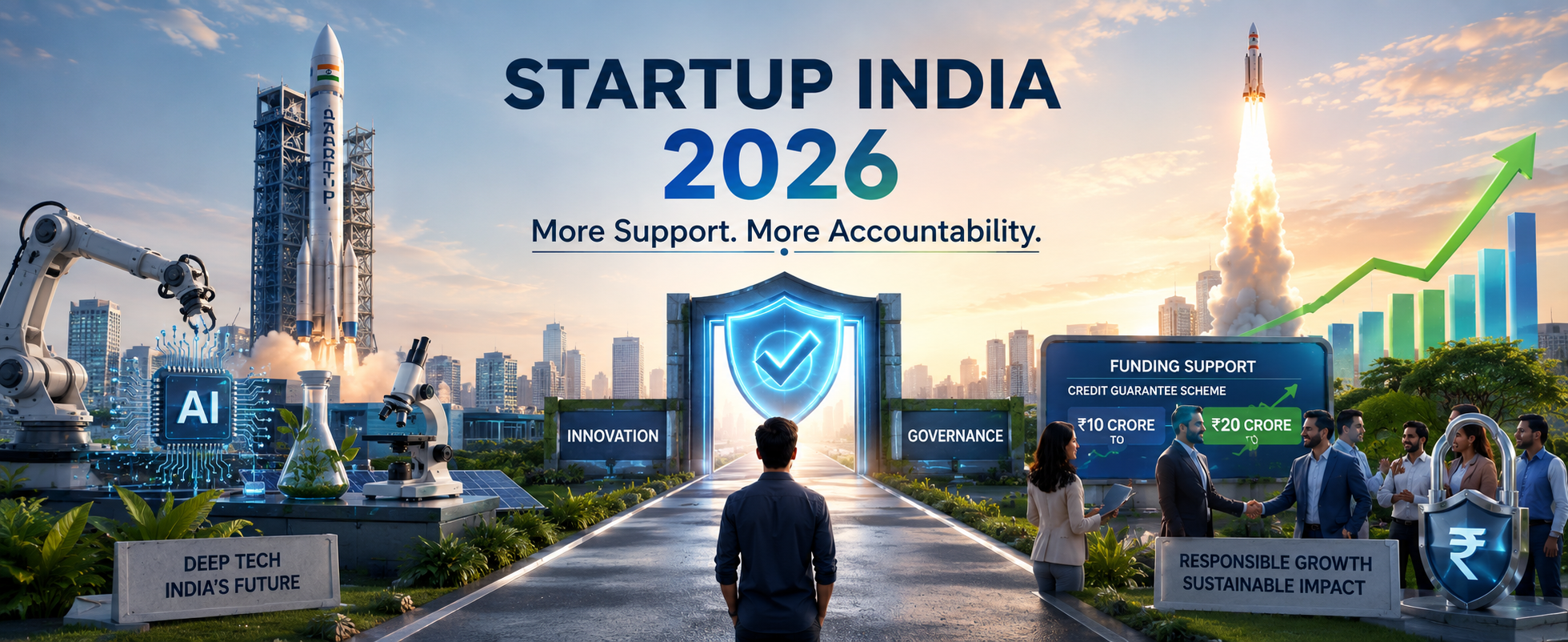
Startup India 2026 Framework: Tighter Compliance, Bigger Opportunities
India's startup ecosystem continues to evolve, but the focus is no longer limited to encouraging new ventures. The Government is increasingly emphasizing accountability, responsible fund utilization, and targeted support for innovation-driven businesses.
Under the updated Startup India 2026 Framework, the DPIIT has introduced important clarifications and enhancements that impact startup eligibility, funding opportunities, and compliance obligations.
What Was the Position Earlier?
Under the existing Startup India framework:
- A startup could retain recognition for up to 10 years from incorporation.
- The turnover threshold for recognition was Rs 100 crore, later increased to Rs 200 crore.
- Compliance around fund utilization existed but lacked detailed restrictions.
- The Credit Guarantee Scheme for Startups (CGSS) provided guarantee coverage up to Rs 10 crore.
While these measures significantly supported startup growth, regulators identified the need for stronger governance and better alignment of funds with business objectives.
What Has Changed Under the 2026 Framework?
1. Greater Support for Deep-Tech Startups
Recognizing the longer gestation periods required in sectors such as AI, semiconductors, robotics, biotech, and advanced manufacturing, the framework now provides:
Recognition validity up to 20 years
Enhanced turnover limit of Rs 300 crore
This allows deep-tech ventures additional time and flexibility to scale without losing startup benefits prematurely.
2. Stricter Fund Utilization Norms
One of the most significant changes is the introduction of explicit restrictions on how startup funds can be deployed.
The framework discourages the diversion of funds toward:
- Luxury assets
- Residential real estate unrelated to business operations
- High-end personal vehicles
- Speculative investments
Misuse of funds may result in:
- Withdrawal of Startup India recognition
- Loss of associated benefits and incentives
- Increased regulatory scrutiny
3. Enhanced Credit Support
The Government has expanded financing support through the Credit Guarantee Scheme for Startups (CGSS).
Earlier: Guarantee coverage up to Rs 10 crore
Now: Guarantee coverage up to Rs 20 crore
This move is expected to improve access to debt financing, particularly for startups with strong business models but limited collateral.
Why Does This Matter?
The revised framework reflects a shift from startup promotion to sustainable startup governance.
For founders, the message is clear:
- Innovation continues to receive strong policy support.
- Access to funding is improving.
- However, greater accountability is expected in the use of capital and operational governance.
For investors, lenders, and advisors, these changes enhance confidence by ensuring that government-backed incentives are directed toward genuine business growth rather than non-core expenditures.
Key Takeaway
The Startup India 2026 Framework strikes a balance between encouraging innovation and strengthening compliance discipline. While deep-tech startups benefit from extended recognition and higher growth thresholds, stricter fund utilization norms and enhanced monitoring indicate that governance standards are becoming equally important as growth metrics.
For startups, the next phase of success will not depend solely on raising capital—but on deploying it responsibly and strategically.

Comments
No Comments yet