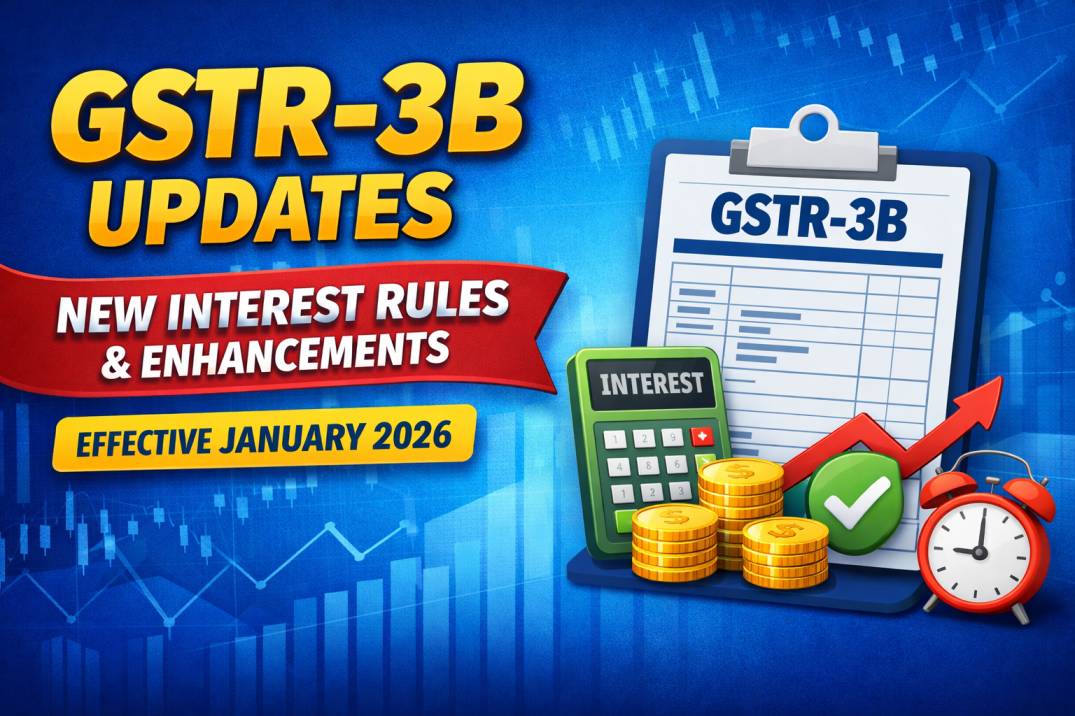
GST Simplified: New Features to Save You from Overpaying Interest
Filing GST returns is receiving a technical makeover to ensure precision and fairness. The Goods and Services Tax Network (GSTN) has introduced several enhancements to the GSTR-3B process that automate complex calculations and credit management.
The "Cash Balance" Benefit
Starting with the January 2026 tax period, the GST portal will automatically recognize the funds you already hold in your Electronic Cash Ledger (ECL) when calculating interest on late payments.
- How it Works: If you maintain a minimum cash balance from the return's due date until the actual date of payment, that amount is subtracted from your net tax liability before interest is applied.
- The Formula:
Interest = (Net Tax Liability - Minimum Cash Balance) X (No of Days /365) X Applicable Interest Rate
- Auto-Population: System-computed interest will appear in Table 5.1 of your GSTR-3B. This value is a "minimum" requirement and cannot be edited downward, though taxpayers must manually adjust it upward if their actual liability is higher.
Automated Reporting and Breakups
To reduce manual entry errors, the portal is introducing new automation for tracking previous tax periods:
- Liability Breakups: The system will auto-populate the "Tax Liability Breakup Table" using the dates of documents previously reported in GSTR-1, GSTR-1A, or the Invoice Furnishing Facility (IFF).
- Verification: Taxpayers can verify these suggestive values by navigating to Table 6.1 (Payment of Tax) on the GSTR-3B dashboard and selecting Tax Liability Breakup.
Updated Timeline for Credit Flexibility
A follow-up update issued on February 19, 2026, clarified a new sequence for utilizing tax credits:
- Flexible IGST Payment: Once your IGST credits are fully exhausted, the portal allows you to use available CGST or SGST credits in any order to discharge your IGST liability.
- Launch Date: While the interest calculation updates begin in January, this specific credit-shuffling functionality becomes available starting with the February 2026 tax period.
Final Returns for Cancelled Taxpayers
The update also affects businesses with cancelled registrations. Any interest due on a delayed final GSTR-3B filing will now be automatically levied and collected through the Final Return (GSTR-10).
These updates represent a significant shift toward an automated system that rewards taxpayers for maintaining cash balances while ensuring strict compliance with the CGST Act.

Comments
No Comments yet