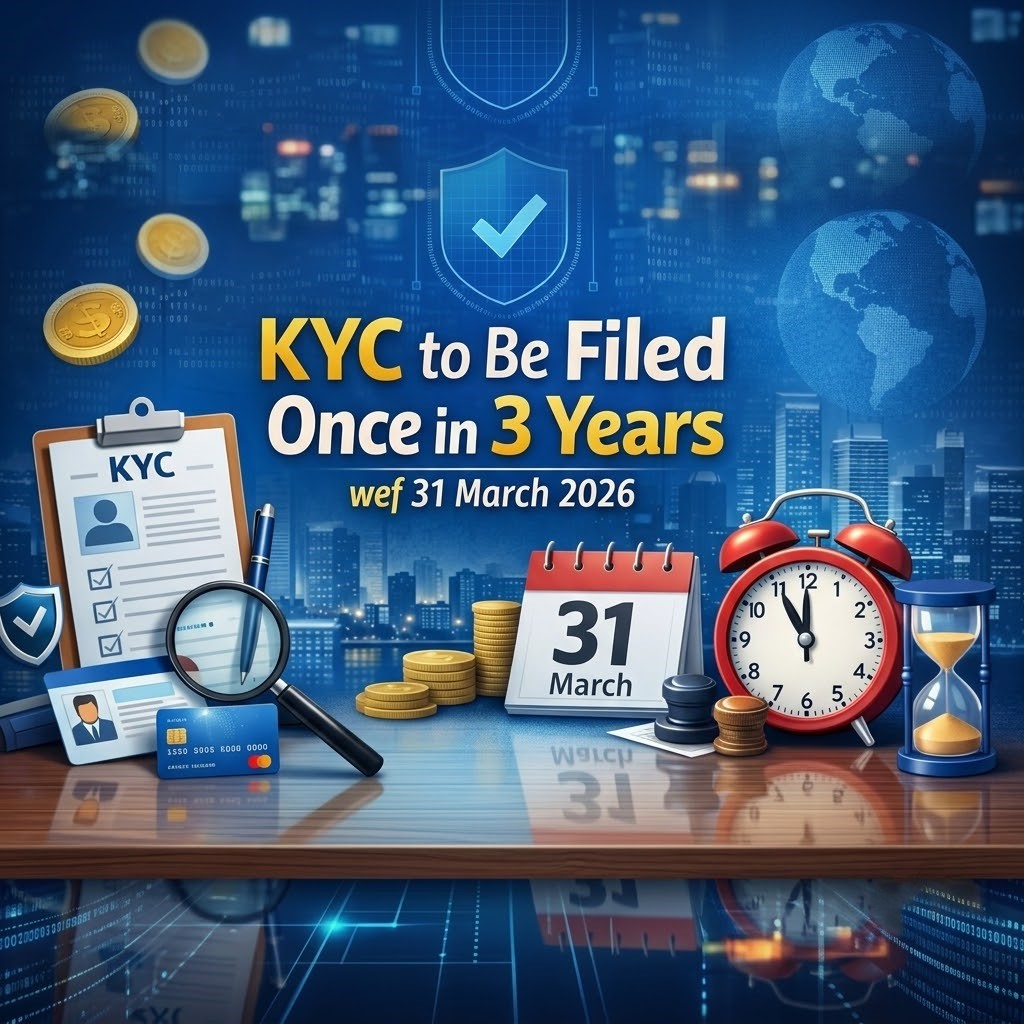
DIR-3 KYC Compliance Overhaul: Understanding MCA's Shift from Annual to Periodic Verification
Introduction
Director identification and verification remain central to corporate governance. To improve efficiency while strengthening digital verification controls, MCA has revised the DIR-3 KYC framework.
The change signals a move away from repetitive annual filings toward technology-enabled verification mechanisms.
What Was the Position Earlier?
Under the earlier framework:
Every individual holding a DIN was required to:
- File DIR-3 KYC annually
- Update personal details every year
- Face DIN deactivation for non-compliance
Although effective, the process created recurring compliance burdens.
What Has Changed?
The revised framework proposes:
Once-in-Three-Year Verification
Instead of annual filings, KYC verification will now generally be required once every:
Three consecutive financial years
Stronger Technology Validation
The MCA21 V3 platform now integrates:
- PAN validation
- Aadhaar authentication
- Real-time data matching
This reduces manual intervention while increasing accuracy.
Why Has MCA Introduced This Change?
The objective is twofold:
Reduce Compliance Burden
Directors no longer need to complete repetitive annual filings.
Improve Data Quality
Technology-based verification is more effective than periodic form submissions.
Practical Impact
For Directors
- Lower compliance burden
- Fewer annual filing obligations
For Companies
- Stronger emphasis on maintaining accurate master records
- Faster detection of discrepancies
Key Takeaway
The reform reflects MCA's broader shift toward technology-driven compliance rather than form-driven compliance.
The responsibility now moves from annual filing discipline to continuous data accuracy.

Comments
No Comments yet