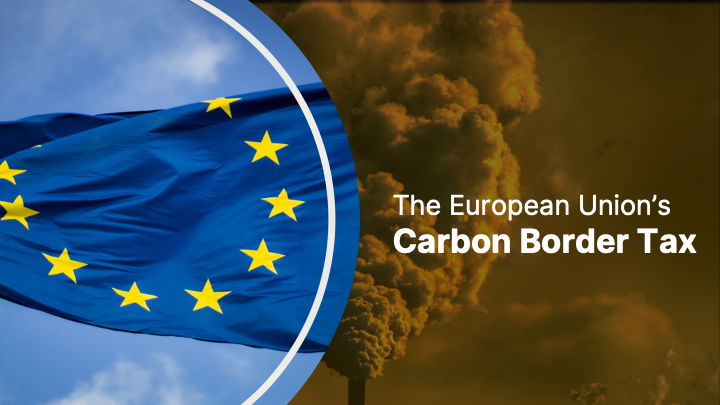
CBAM and the Carbon Border Tax: A New Era of Climate Accountability
In its pursuit of climate neutrality by 2050, the European Union has introduced one of the most significant climate policy tools in recent years: the Carbon Border Adjustment Mechanism (CBAM), often referred to as the Carbon Border Tax.
CBAM aims to address a critical challenge in global climate governance — carbon leakage. This occurs when companies shift production to countries with weaker environmental regulations to avoid stringent carbon pricing policies. By imposing a carbon cost on imported goods, the EU intends to ensure that foreign producers face similar climate accountability as European manufacturers.
Understanding the Mechanism
Under CBAM, importers of certain carbon-intensive goods into the EU will be required to report the embedded carbon emissions associated with their products and purchase CBAM certificates corresponding to those emissions.
Initially, the mechanism applies to sectors that are among the most carbon-intensive and most at risk of carbon leakage, including:
- Steel and iron
- Aluminium
- Cement
- Fertilizers
- Hydrogen
- Electricity
The transitional phase began in October 2023, during which importers must report emissions but are not yet required to pay the carbon cost. The full financial implementation is expected by 2026, when importers will start purchasing CBAM certificates linked to the EU carbon price under the EU Emissions Trading System (EU ETS).
The Numbers Behind the Policy
Europe currently imports a substantial share of its carbon-intensive materials. For instance, over half of the steel consumed in the EU is imported, often from countries where carbon pricing policies are either weaker or non-existent.
Without a mechanism like CBAM, the EU’s domestic climate policies risk losing effectiveness as production shifts abroad. According to estimates, CBAM could help reduce more than 30 million tonnes of CO? emissions annually by 2030 — roughly equivalent to removing 6–7 million cars from the road each year.
Implications for Global Trade
CBAM has sparked widespread debate across global markets. While European manufacturers may benefit from a more level playing field, exporters from developing economies have raised concerns about increased trade barriers.
Countries with carbon-intensive production processes could face higher costs when exporting to the EU. For example, India’s aluminium and steel exports may face additional costs of up to 15–20% unless production shifts toward lower-carbon technologies.
This has prompted governments and industries worldwide to reconsider their climate strategies, supply chains, and investment in cleaner production methods.
Is CBAM Protectionism or Climate Policy?
Critics argue that CBAM could function as a disguised trade barrier, particularly affecting developing economies that rely heavily on energy-intensive exports. However, the EU maintains that the mechanism is designed purely to ensure climate fairness and regulatory alignment.
From the EU’s perspective, companies operating within its borders already bear the cost of carbon through the EU Emissions Trading System (ETS). CBAM simply extends similar accountability to imported goods, ensuring that climate ambition is not undermined by international trade.
Why CBAM Matters for Businesses and Investors
CBAM is not just a regional policy — it signals a broader shift in the global economic landscape. Carbon emissions are increasingly becoming a financial variable, influencing trade competitiveness, investment decisions, and supply chain strategies.
For businesses, this means:
- Carbon transparency will become essential
- Low-carbon manufacturing will gain competitive advantage
- ESG reporting and emissions accounting will become central to trade
Companies exporting to the EU will need to measure, report, and reduce their carbon footprint to remain competitive.
India Perspective: Preparing for the CBAM Era
For India, CBAM presents both a challenge and an opportunity. The European Union is one of India’s major export destinations for carbon-intensive goods such as steel, aluminium, and fertilizers, and the introduction of CBAM could increase compliance costs for Indian exporters if their production processes are carbon intensive.
However, the policy also creates a strong incentive for Indian industries to accelerate the transition toward cleaner manufacturing, adopt energy-efficient technologies, and strengthen carbon accounting and emissions reporting systems. Companies that proactively invest in low-carbon production and transparent ESG disclosures may gain a competitive advantage in global markets.
At a policy level, CBAM is likely to push countries like India to strengthen domestic carbon markets, climate disclosure frameworks, and sustainability reporting mechanisms. As global trade increasingly integrates climate considerations, Indian businesses will need to align their strategies with emerging carbon pricing and sustainability standards to remain competitive in international supply chains.
The Road Ahead
CBAM represents a turning point in climate governance. It reflects a growing recognition that climate commitments cannot remain confined within national borders.
As carbon pricing mechanisms expand globally, policies like CBAM may become increasingly common. For industries, policymakers, and investors alike, the message is clear: the era of carbon accountability has begun.

Comments
No Comments yet