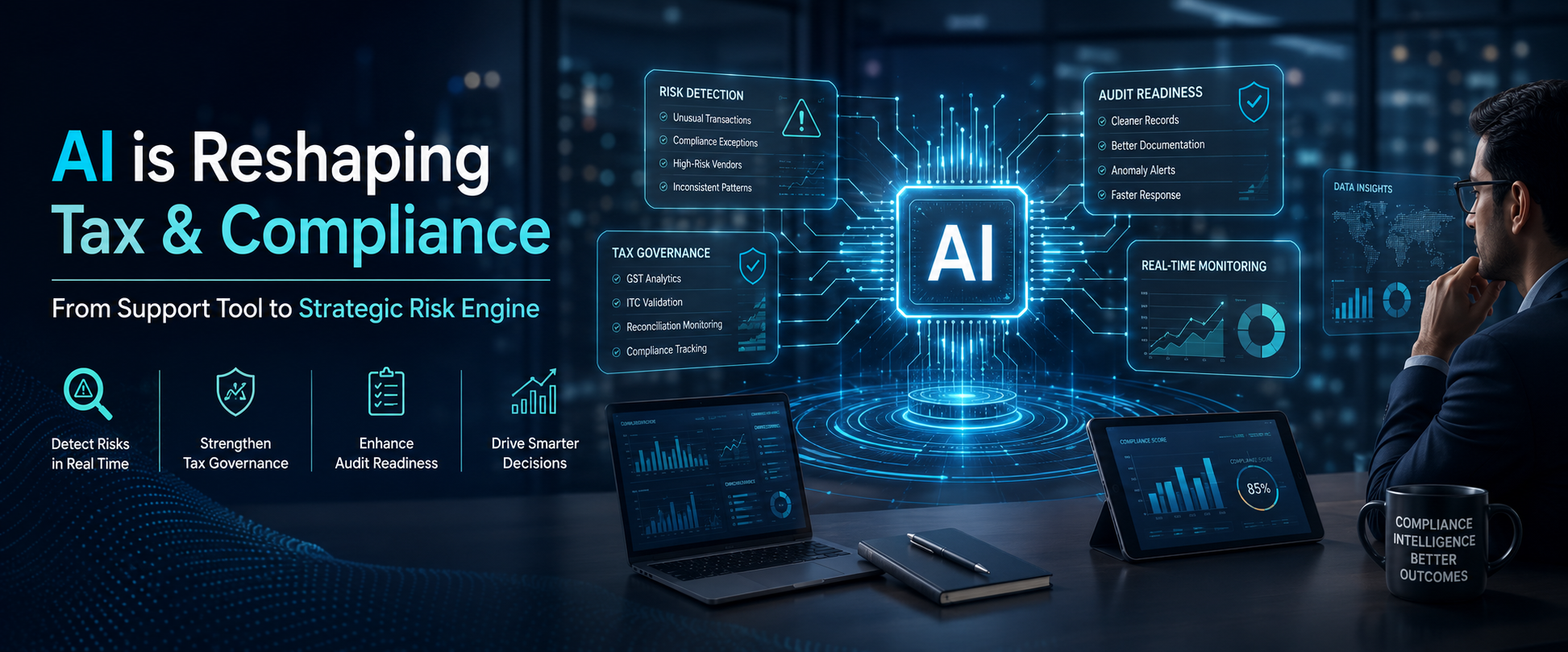
AI is Reshaping Tax & Compliance Functions: From Support Tool to Strategic Risk Engine
Artificial Intelligence is no longer a futuristic concept in taxation and compliance. Across organizations, tax authorities, and professional firms, AI is rapidly moving from a back-office productivity tool to a frontline mechanism for risk identification, anomaly detection, and compliance monitoring.
The shift is significant because tax compliance is no longer being driven solely by periodic filings and manual reviews. Increasingly, data analytics, automation, and AI-powered systems are enabling real-time scrutiny and decision-making.
What Was the Traditional Approach?
Historically, tax and compliance functions largely relied on:
- Manual data reviews
- Sample-based verification
- Periodic reconciliations
- Post-filing assessments
- Human-driven risk identification
While technology supported reporting and documentation, critical compliance decisions still depended heavily on manual intervention.
This often resulted in:
- Delayed detection of errors
- Higher compliance costs
- Increased risk of oversight
- Reactive rather than preventive compliance management
What Is Changing?
Organizations are increasingly adopting AI-driven tools that can:
1. Identify Risks in Real Time
AI systems can continuously analyse large volumes of transactional data and highlight:
- Unusual transactions
- Inconsistent reporting patterns
- Compliance exceptions
- High-risk vendor relationships
This allows issues to be identified before they become regulatory concerns.
2. Improve Tax Governance
Modern compliance frameworks are moving toward continuous monitoring rather than periodic review.
AI can assist in:
- Reconciliation monitoring
- GST and direct tax analytics
- Input tax credit validations
- Compliance tracking
- Regulatory change management
As a result, organizations gain greater visibility over compliance risks.
3. Enhance Audit Preparedness
Regulators are increasingly leveraging data analytics and technology-driven scrutiny.
Businesses using AI-enabled compliance systems can:
- Maintain cleaner records
- Improve documentation quality
- Detect anomalies earlier
- Respond faster to regulatory queries
This strengthens overall audit readiness.
Why Does This Matter?
The tax environment is becoming increasingly data-driven.
Regulators today have access to:
- E-invoicing data
- GST filings
- TDS information
- Financial reporting databases
- Digital transaction trails
As regulatory technology becomes more sophisticated, organizations must adopt equally advanced compliance mechanisms.
The focus is shifting from:
Compliance Reporting → Compliance Intelligence
Practical Implications for Businesses
Organizations should consider:
Investing in data analytics capabilities
Automating routine compliance processes
Strengthening governance over AI-generated outputs
Upskilling tax and finance teams on emerging technologies
Integrating compliance monitoring with business decision-making
For professional firms, AI is likely to enhance—not replace—the role of tax and compliance professionals by allowing them to focus more on advisory, risk management, and strategic decision-making.
Key Takeaway
AI is transforming tax and compliance functions from reactive reporting centers into proactive risk-management engines.
Organizations that embrace automation, analytics, and AI-driven monitoring will be better positioned to manage regulatory expectations, improve governance, and reduce compliance risks.
The future of compliance will not be defined by how quickly returns are filed, but by how effectively risks are identified, monitored, and addressed before they become issues.

Comments
No Comments yet