Executive Summary
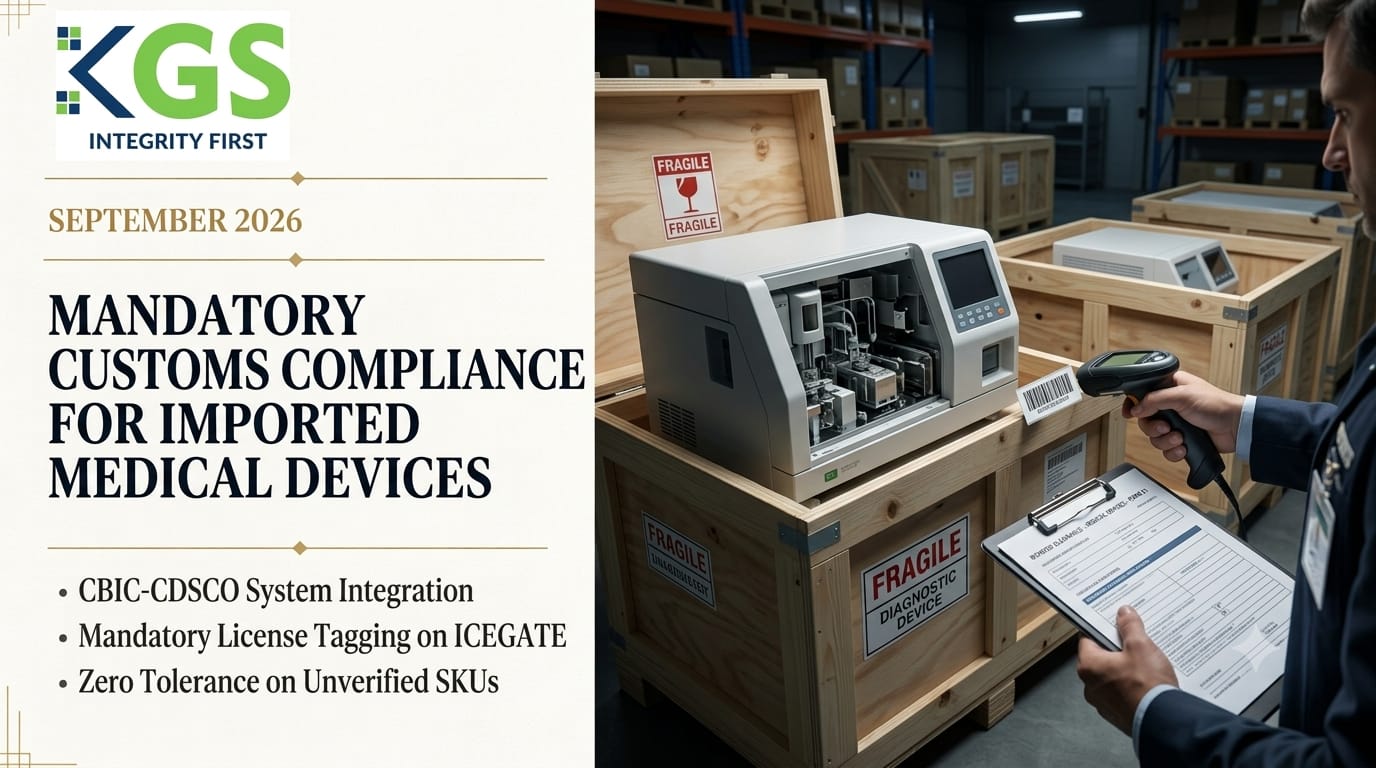
The CBIC issued a circular on September 3, 2026, mandating automated compliance checks for all medical device consignments imported into India. Developed in coordination with the Central Drugs Standard Control Organization (CDSCO), the framework integrates customs clearance checkpoints with the Medical Device Rules, 2017, barring non-compliant devices from entering domestic channels.
Background
Medical device imports were previously subject to manual or selective post-clearance audits, creating enforcement gaps for uncertified, misbranded, or grey-market diagnostic equipment. To protect public health standards and create a level playing field for domestic manufacturers, the CBIC introduced automated, mandatory regulatory validation at the point of customs entry on the ICEGATE platform.
What Has Changed
Particulars Earlier Procedure Revised Procedure (Circular 03 Sep 2026)
Clearance Verification Manual bill of entry checks / random verifications Automated, mandatory system verification against CDSCO licenses
System Clearance Requirement Separate customs and drug authority submissions Integrated single-window electronic compliance sign-off
Key Provisions
• Mandatory License Mapping: Importers must enter valid CDSCO Manufacturing/Import Licenses (such as Form MD-14/MD-15) directly into the Bill of Entry fields.
• Automated Validation: The customs clearance engine cross-references license credentials with the CDSCO SUGAM database prior to generating delivery orders.
• Restricted Entry on Failure: Consignments lacking active licenses, correct labeling, or verified device master files face automatic hold protocols at port boundaries.
Applicability
• Covered Entities: All commercial importers, medical equipment distributors, diagnostic manufacturers, and customs brokers handling medical devices.
• Items Covered: All notified categories of medical devices classified under the Medical Device Rules, 2017.
Practical Implications
• Supply Chain Logistics: Unregistered shipments will face immediate customs holds, leading to demurrage and detention charges for unprepared importers.
• Regulatory Documentation: Requires alignment between product descriptions on commercial invoices, bills of lading, and underlying CDSCO registration certificates.
• Internal Controls: Corporate compliance teams must implement pre-shipment verification checks before overseas suppliers dispatch cargo.
What Should We Do
• Conduct an audit of active CDSCO import licenses for all imported SKUs.
• Ensure customs brokers receive verified registration numbers and license copies prior to manifest filings.
• Verify device labels meet Indian statutory labeling standards (including license numbers and manufacturer details) prior to overseas dispatch.
KGS Perspective
The integration of specialized regulatory databases with customs clearance portals demonstrates the expansion of automated compliance enforcement. Importers must replace fragmented logistics handoffs with end-to-end regulatory oversight to maintain uninterrupted trade flows.
Conclusion
CBIC's circular of September 3, 2026, establishes rigorous quality controls at import entry points, requiring medical device importers to maintain verified CDSCO compliance records.
Source / Regulatory Reference
• Regulator: Central Board of Indirect Taxes and Customs (CBIC)
• Notification / Circular / Regulatory Reference: CBIC Circular on Compliance Checks for Medical Devices [Dated 03 September 2026]
• Official Document Link: https://www.cbic.gov.in

Comments
No Comments yet